The book by M Z Babar · Second edition
Your dollar is shrinking. Here's what to do about it.
A calm, plain-English guide to inflation, Bitcoin and protecting your money. No hype, no price predictions, no get-rich promises. Just the understanding you need to make your own decisions, and a one-page plan to keep you steady.



Chapter 1 · The shrinking dollar
The pay cut nobody announces.
Imagine your boss said, “Starting today, we're cutting your pay by 3%. It won't show up on your pay stub.” You'd be furious. Inflation does the same thing quietly.
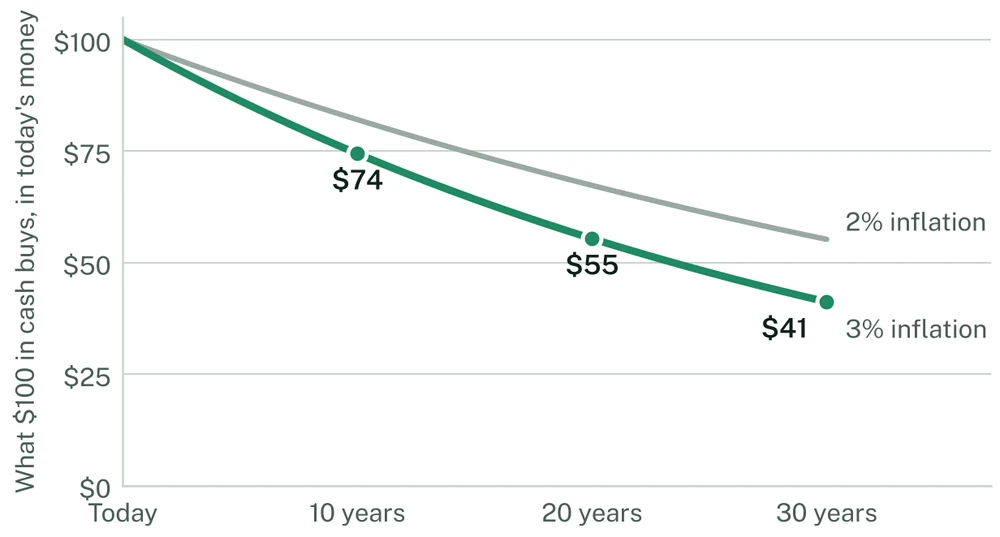
Your paycheck shows the same number, but each dollar buys a little less. Small numbers compound: at 3% a year, $100 kept in cash buys about $74 of today's goods in ten years, and about $41 in thirty. Nothing dramatic happens. That's what makes it so easy to ignore and so costly to live with.
That's what $100 kept in cash will buy in 10 years at 3.0% inflation.
Rule of 72: at this rate, prices double about every 24 years.
Inside the book
From your grocery bill to a written plan.
Four parts, each building on the last. Real pages from the book below: every chart uses the numbers worked through in the text.
Part One · The Problem
Why your money shrinks
Inflation, fiat money and the saver's dilemma: where dollars come from, who wins and loses when more are made, and the order to build your finances in.
Part Two · The Tool
What crypto really is
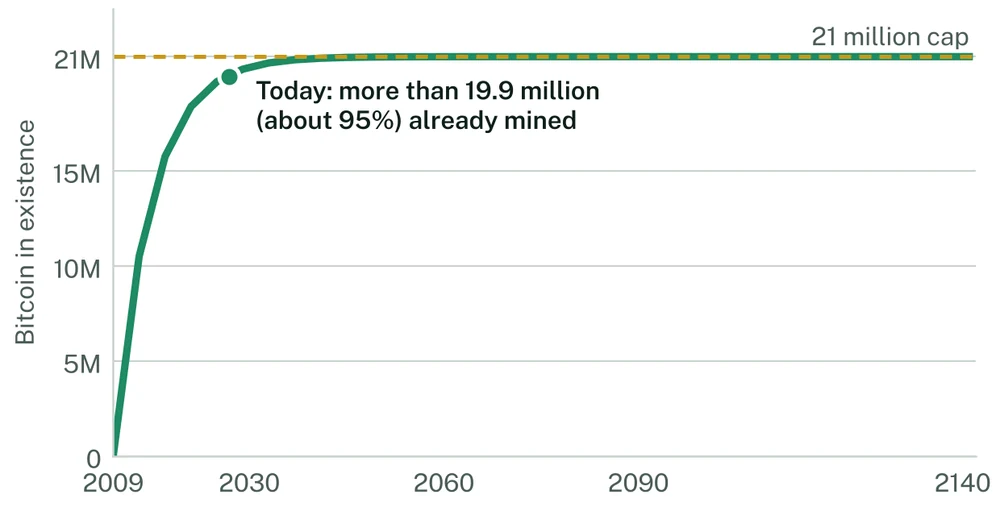
Bitcoin's fixed supply, Ethereum and stablecoins, a test that separates substance from hype, and an unflinching look at crashes and scams.
Part Three · The Practice
How to act safely
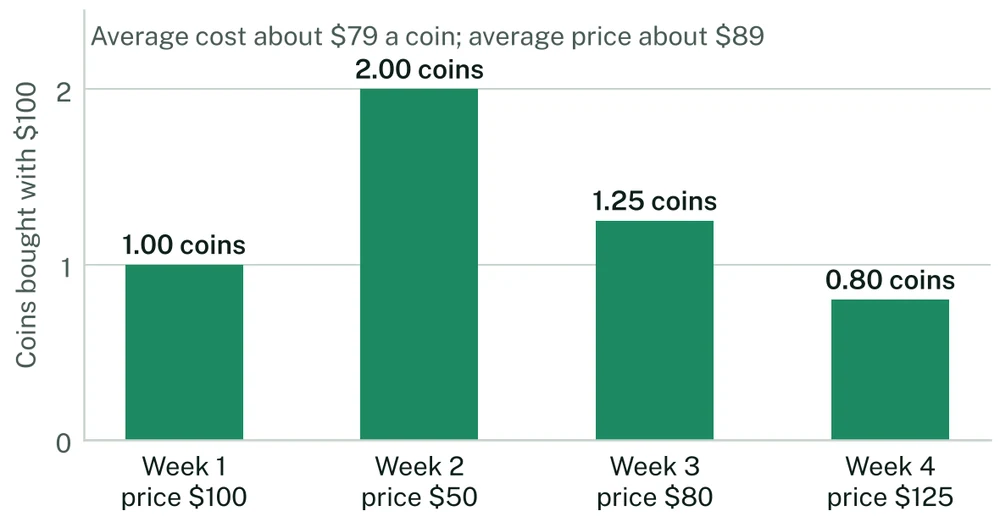
The readiness check, real fees, dollar-cost averaging, seed phrases, safe sending, inheritance letters and taxes, step by step.
Part Four · The Portfolio and the Plan
How much, and how to hold on
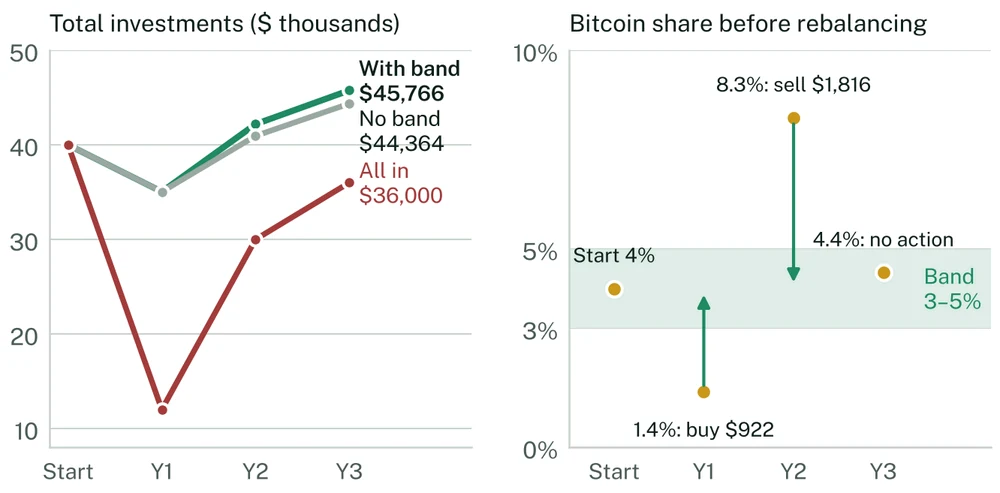
Portfolio theory in plain English, taming volatility, a crypto portfolio built to survive crashes, and your one-page plan.
The people you'll follow
Four lives, one question: what do I actually do?
The book follows four composite characters, built from situations that are painfully common. Their numbers are worked out in full, so you can copy the method with your own.
Maria Torres
46 · Nurse, single momDoing everything right and still falling behind. Her pay rose 16% in five years; her rent and groceries rose 25%. She becomes the book's model for a calm, written plan.
Carlos Reyes
29 · Warehouse supervisorTurned $1,200 into $3,100 on a dog-themed coin, then watched it fall to $90. He starts over carefully, and learns what a 5% slice really means.
Ray Coleman
67 · Retired machinistGot as far as his car before he realized the "tax agent" demanding bitcoin was a scammer. Now he keeps crypto under 2% and the red-flag list by the phone.
Linda Park
61 · Retired teacherLost $17,000 to a friendly stranger who started with a wrong-number text. Her plan's crypto line now reads 0%, and she helps other retirees spot the scam.
Why I wrote it
Who decides how much money there is, and who pays when they decide to make more?
M Z Babar, from the Prologue
“I have spent my career in technology. I know how systems are built, how they fail and how much trust we place in the people who run them.” … “What changed my mind wasn't a price chart. It was a question I couldn't stop asking once I had started.”
“This book will not tell you what to buy. It will not predict prices. It will not promise that you will get rich.” … “Whether you finish this book with a small amount of crypto, a well-protected savings plan or simply a clearer view of how money works, you will be making your choices with your eyes open.”
Free for readers
The book's tools, ready to use.
Already have the book? The Reader's Companion turns its exercises into tools you can use tonight. Haven't read it yet? Try them anyway, then let the book explain the why.
The one-page plan
Chapter 15's Beyond Fiat Plan as a fill-in form. Saves as you type; print it or save it as a PDF.
OpenKitchen-table stress test
Crypto down 80%, stocks down 30%, bonds down 5%, in one year. See what it would cost you.
OpenInflation calculator
What your cash will buy in 10, 20 or 30 years, and whether your savings are really growing.
OpenRebalancing band checker
Enter your target and band. It tells you to buy, sell or, most of the time, do nothing.
OpenLoss recovery and volatility drag
Why an 80% fall needs a 400% gain, and how big swings eat returns.
OpenThe 10-question project test
Score any coin the way Chapter 7 does, before you put a dollar in.
OpenPrintable checklists
Readiness check, scam red flags, security drill, tax season, your first 90 days and more.
OpenThe glossary
All 108 terms from the book, in one plain sentence each. Searchable.
OpenOur promise
What you will never hear from us.
Most crypto content is built to make you feel you're missing out. This is built to help you stay calm and decide for yourself, including deciding that the right amount is zero.
- “Guaranteed returns” or “get rich quick”
- Price predictions or coin picks
- Personal buy or sell advice in comments or DMs
- A request for your seed phrase, ever
- Paid promotions without clear disclosure
- Upside without the risks shown right next to it
Questions
Plain answers to common questions.
Short versions of what the book explains in full.
What is fiat money?
Fiat money has value because a government declares it legal tender and people trust it, not because it can be exchanged for gold. Americans lost the right to swap dollars for gold in 1933, and the last link (for foreign governments) was cut on August 15, 1971. Since then the US dollar has been pure fiat money.
Why do prices keep rising?
In the US, most new money is created when banks make loans, and the Federal Reserve steers that process with interest rates. The Fed aims for about 2% inflation a year. Even 3% a year means $100 kept in cash buys only about $74 worth of goods after 10 years.
Is Bitcoin a good hedge against inflation?
It is unproven. Bitcoin's supply is capped at 21 million coins, which is why some people see it as protection from money printing. But its price has fallen between about 77% and 93% several times, and in 2022, when US inflation peaked at 9.1%, bitcoin fell about 65%. Beyond Fiat treats it as a volatile, speculative asset, not a guaranteed shelter.
How much of my money should be in crypto?
Beyond Fiat does not give personal advice. The book shows example portfolios that hold crypto at no more than 2% (cautious), 3% to 5% (balanced) or 6% to 10% (growth) of investments, only after an emergency fund is in place and high-interest debt is paid off, and sized so that an 80% fall would not force you to sell. Zero is a perfectly legitimate answer. A licensed professional can help you apply this to your situation.
How do I avoid crypto scams?
Never share your seed phrase with anyone, including someone claiming to be support. Be wary of a stranger who turns a wrong-number text into a friendship and then an investment opportunity. Any request to pay a “tax” or “fee” before you can withdraw your money is a sign of fraud, and guaranteed returns are a red flag every time.
I already have the book. What's on the website for me?
The free Reader's Companion: a guide to every chapter, the book's calculators (inflation, stress test, rebalancing band, loss recovery, the 10-question project test), printable checklists, the full glossary and the one-page Beyond Fiat Plan builder that Chapter 15 asks you to write.
Who is behind Beyond Fiat?
Beyond Fiat was founded by M Z Babar, a technology professional with an MBA from Old Dominion University (2009) and the author of Beyond Fiat: A Beginner’s Guide to Crypto, Inflation and Protecting Your Money. Everything on the site is education only, never price predictions or coin picks.
Stay in the loop
New tools, fact updates and the course, first.
Crypto rules and facts change. Readers on the list hear about important updates to the book's numbers, new worksheets in the Companion, and the Crypto Foundations video course before anyone else.
- A couple of emails a month at most
- Never sold, never shared
- One-click unsubscribe
Start here
Make your next money decision with your eyes open.
Kindle $12.99 · Paperback $14.99 · Free reader extras on this site.