Part Two: The Tool
Chapter 8: The Dark Side
Crashes, leverage, failed companies and the scams that cost Americans billions, and how to protect your family.
How the chapter opens
People who get hurt in crypto are usually hurt in one of four ways: crashes they didn’t expect, borrowed money that magnified those crashes, companies they trusted too much, and scammers who sounded like friends. This chapter takes each in turn, and it gives the skeptics’ case a full hearing.
Key ideas
Try this
Share the red-flag checklist with one family member, especially an older relative. Tell them Linda’s and Ray’s stories. Agree on a rule together: before either of you sends crypto or money to anyone you haven’t met in person, you’ll call each other first.
In this chapter
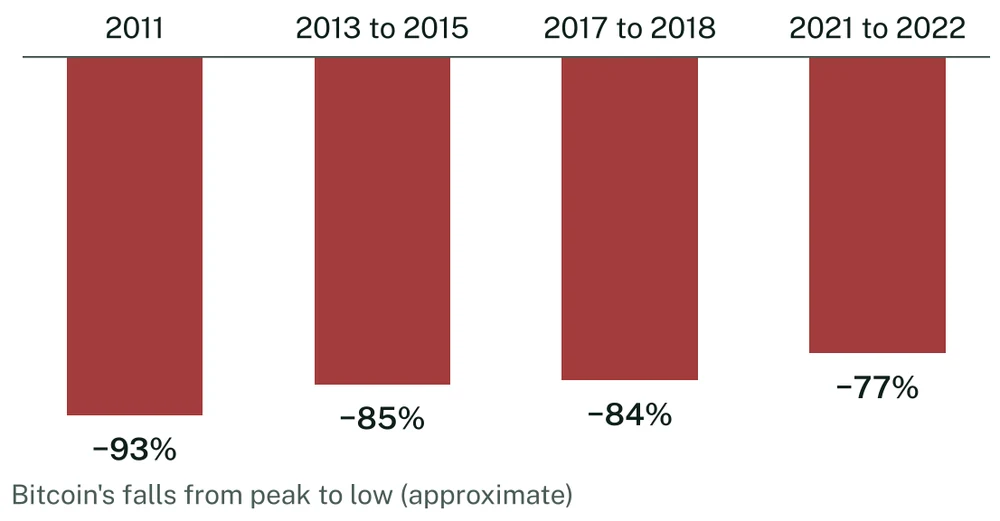
- Crashes are part of the history
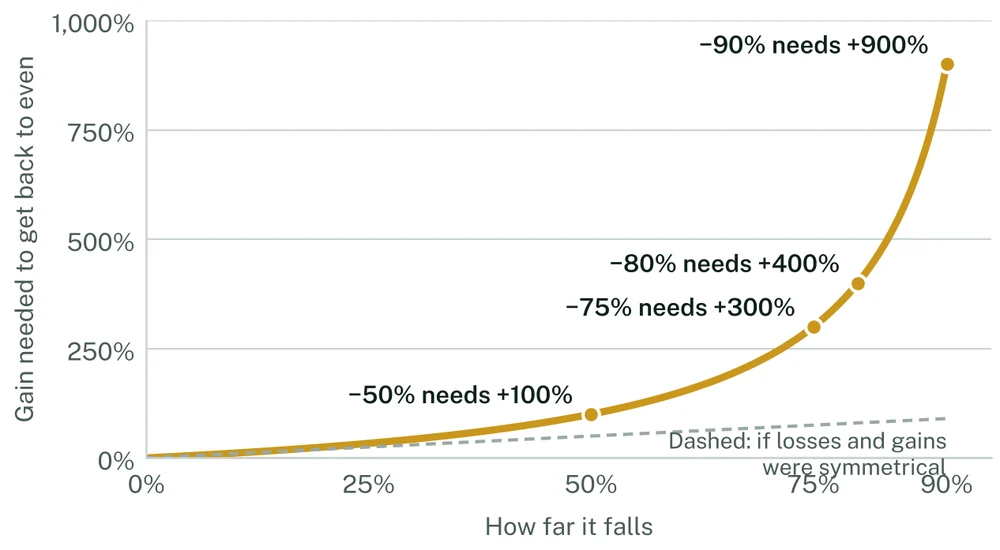
- The math of losses
- Borrowed money makes it worse
- When the company is the risk
- The skeptics’ case
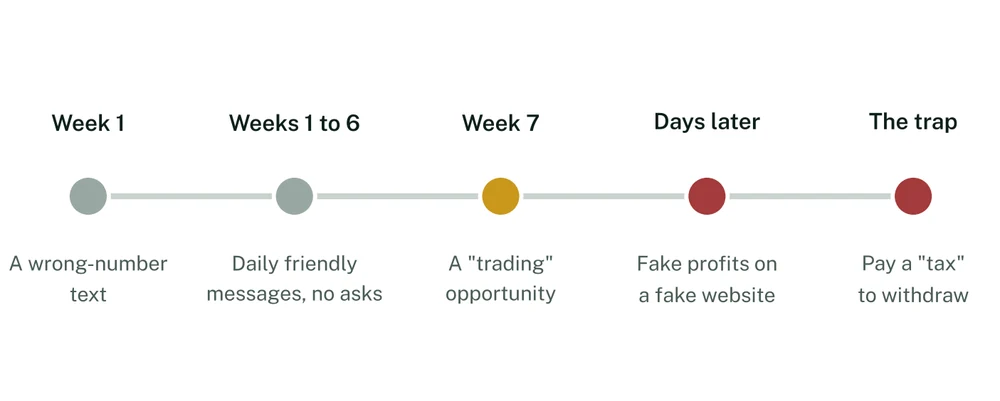
- Linda’s new friend
- The scams that cost people the most
- Ray’s phone call
- A phishing email, up close
- Red-flag checklist
- Protecting the people you love
Read the whole chapter
The book walks through every idea here with worked examples and real numbers.
Get the bookFrom the chapter
The charts