Part Four: The Portfolio and the Plan
Chapter 13: Understanding and Taming Volatility
Volatility drag, drawdowns, five tools that tame the swings, and a stress test you can do at the kitchen table.
How the chapter opens
Ray Coleman, the 67-year-old retired machinist from Chapter 2, never planned to own bitcoin. His daughter gave him a small amount for his birthday, and he added a little of his own out of curiosity. Within a month he watched it rise 18% and then fall 22%. His first thought was that something must be broken.
Key ideas
Try this
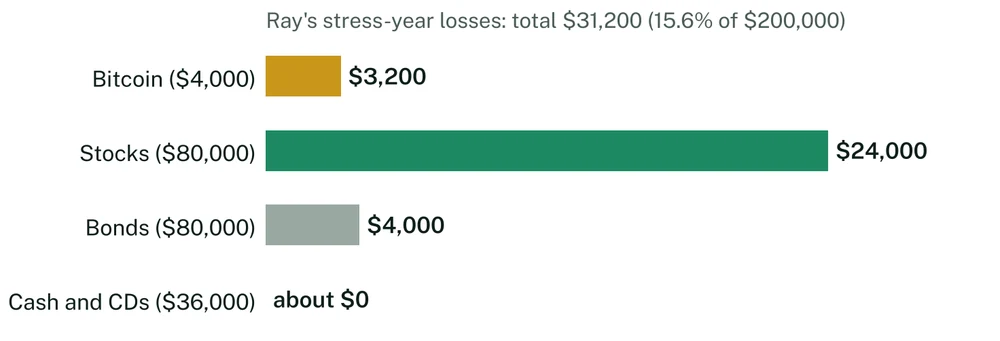
Do the kitchen-table stress test with your own numbers: crypto down 80%, stocks down 30% and bonds down 5%, all in the same year. Write the total loss in dollars and as a percentage of your investments. If it’s more than you could live with for two years, decide now what size would pass the test.
In this chapter
- What volatility really is
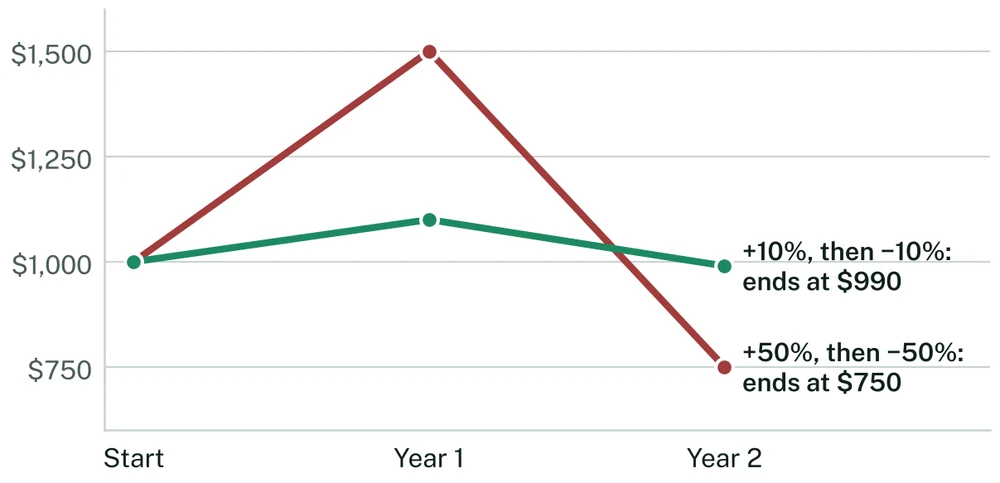
- The hidden cost: volatility drag
- Drawdowns: the number that tests your nerves
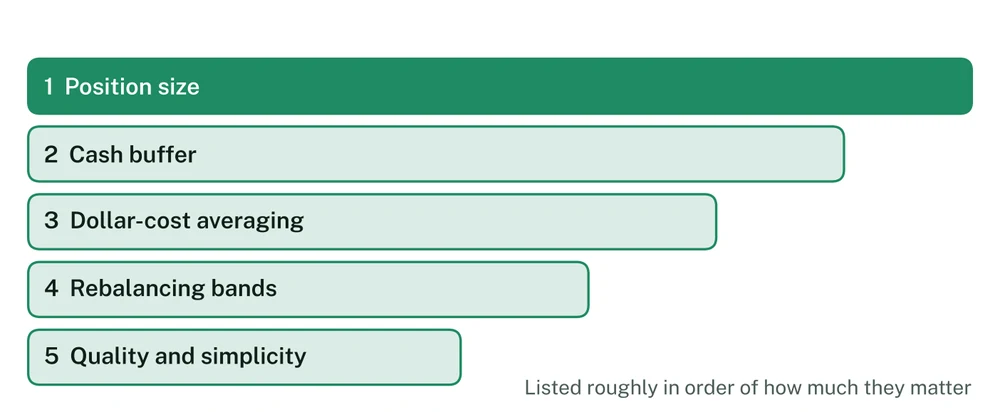
- The five tools that tame volatility
- What does NOT tame volatility
- A stress test you can do at the kitchen table
Read the whole chapter
The book walks through every idea here with worked examples and real numbers.
Get the bookFrom the chapter
The charts