Part One: The Problem
Chapter 2: What Money Really Is
The three jobs of money and the five properties that decide whether any money, old or new, is good money.
How the chapter opens
Ask ten people what money is and most will pull a bill out of their wallet. But that piece of paper is not money in itself. It is a tool that stands in for something deeper: a shared agreement about value. To judge any kind of money, old or new, dollars or Bitcoin, we need to know what that agreement requires.
Key ideas
Try this
Score three things you could hold your savings in (for example, cash, gold and a stock index fund) using the five properties. Give each property a 1 to 5. Then think of one “informal money” in your own life, like gift cards or reward points, and score it too. Keep your scores; you’ll add Bitcoin to the table in Chapter 5.
In this chapter
- Ray’s garage sale
- The barter problem: a thought experiment
- Money appears on its own
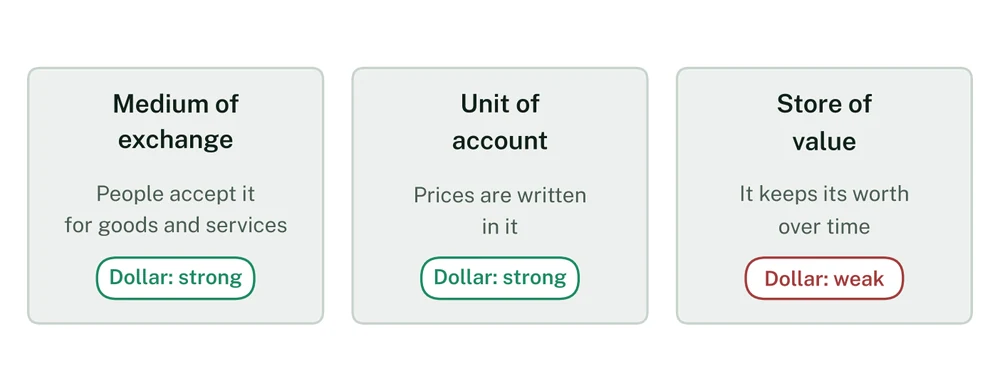
- The three jobs of money
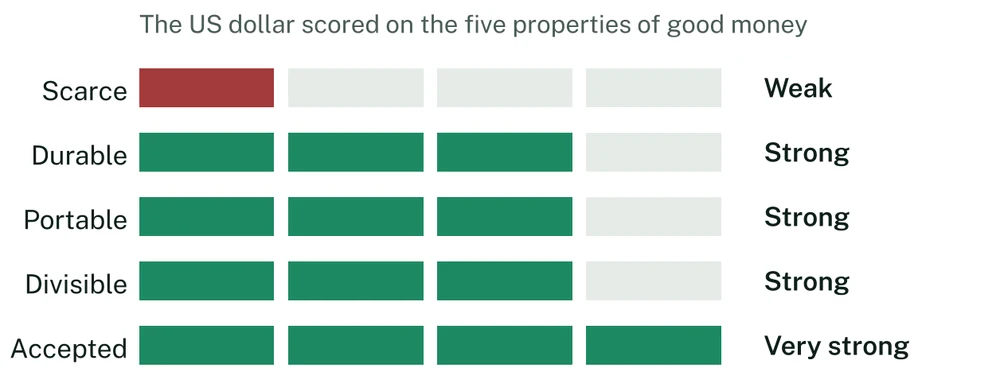
- The five properties of good money
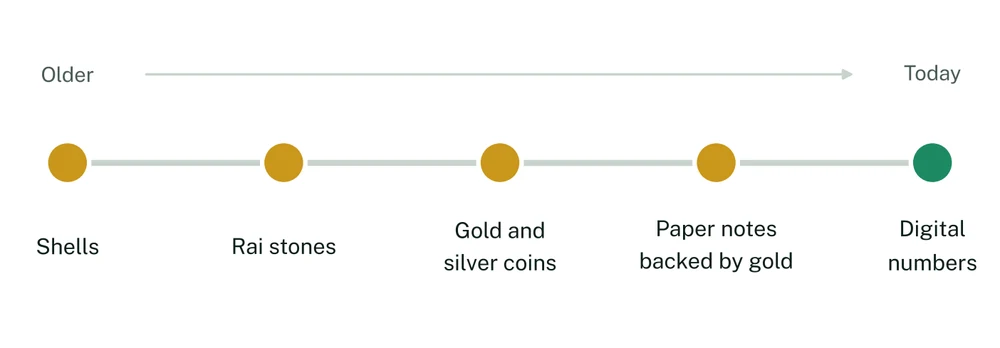
- A short history in five objects
- When money breaks: the coin clippers
- His father’s coin jar
- Scoring today’s dollar
- Money is trust
Read the whole chapter
The book walks through every idea here with worked examples and real numbers.
Get the bookFrom the chapter
The charts