Part Three: The Practice
Chapter 9: Getting Started Safely
The readiness check, three ways to own crypto, real fees, dollar-cost averaging and the seven-day pause.
How the chapter opens
Part Two made the case for crypto and the case against it. If you came out of it wanting some, this chapter shows you how to start small and safely. If you came out wanting none, that is a perfectly good result, and you’ll be much harder to scam either way. How much to own is worked out properly in Chapters 12 to 14. Until then, start from zero and make yourself justify every percent above it.
Key ideas
Try this
Fill in the blanks in “Write your rules before you start.” Sign and date the page and keep it somewhere you’ll see it the next time prices swing. If you decide to make a first purchase, keep it small, and write down the fee and spread you paid.
In this chapter
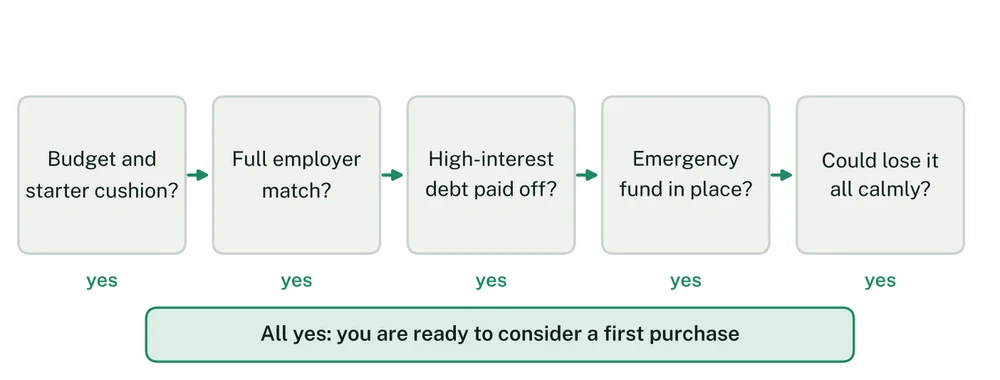
- Step 0: the readiness check
- Three ways to own crypto
- Choosing an exchange
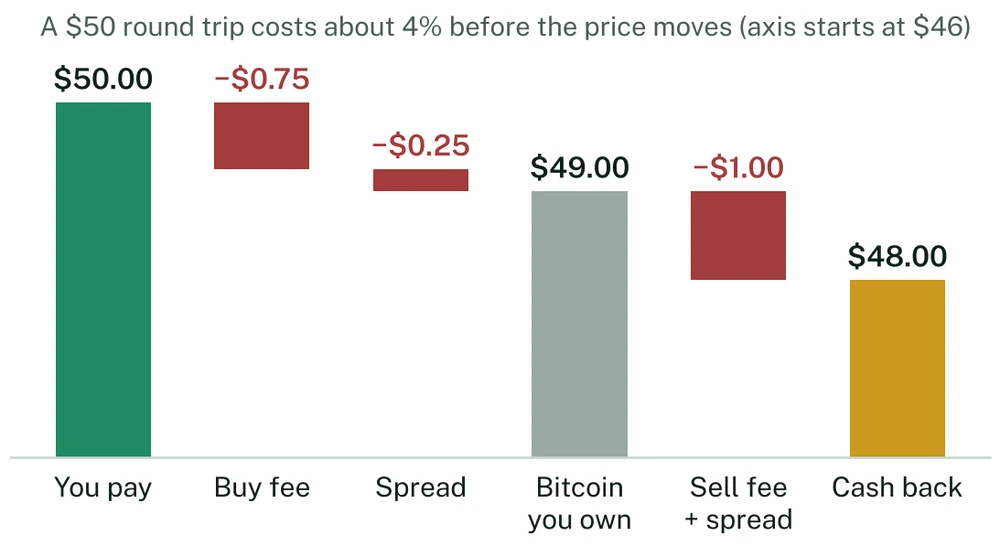
- Understanding fees: a worked example
- Maria’s first purchase
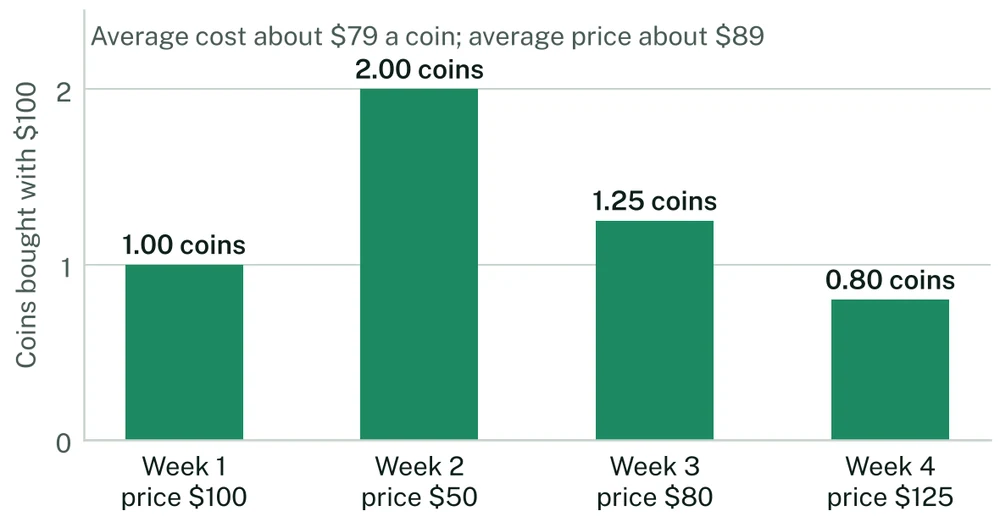
- Dollar-cost averaging
- Write your rules before you start
- Ray takes the ETF route
- Common first-purchase mistakes
- What about a retirement account?
Read the whole chapter
The book walks through every idea here with worked examples and real numbers.
Get the bookFrom the chapter
The charts