Part Three: The Practice
Chapter 10: Keys, Wallets and Security
Seed phrases, hot and cold wallets, the safe-send routine and an inheritance plan.
How the chapter opens
In traditional banking, if you forget your password, you call the bank. In crypto, if you lose your keys, there’s often no one to call. That’s the price of a system with no middleman. The security skills involved are simple, and once set up they take little ongoing effort.
Key ideas
Try this
Do a security check-up today: turn on app-based 2FA on every financial account, add a PIN with your mobile carrier, and write your inheritance letter. If you already hold crypto, practice a recovery check: confirm you can find your seed phrase and that it’s stored somewhere safe from fire, water and curious visitors.
In this chapter
- The hard drive in the landfill
- What a wallet really is
- The seed phrase: your master key
- Carlos loses his phone
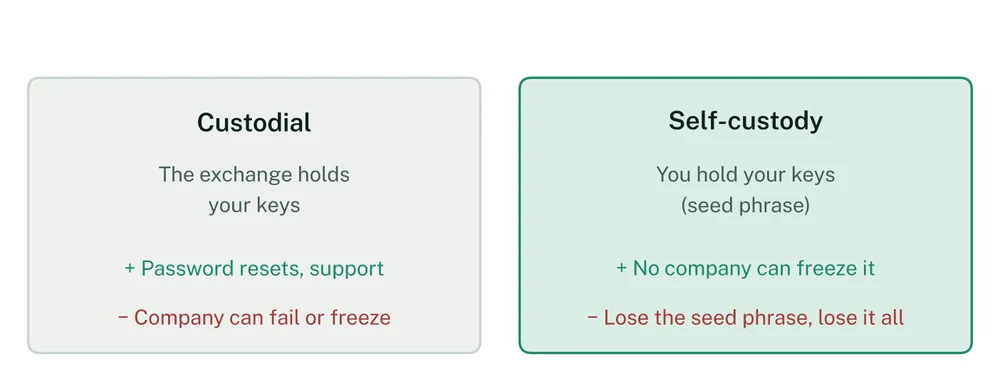
- Custodial vs. self-custody
- Hot wallets and cold wallets
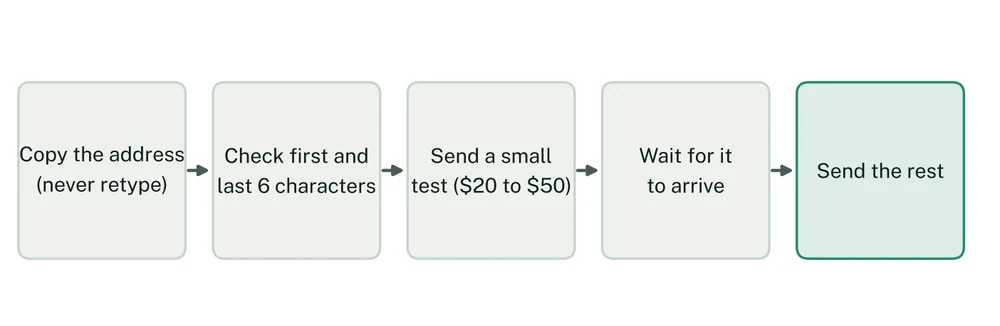
- Sending crypto safely
- Worked example: Maria’s test send
- Account security basics
- Planning for the people you love
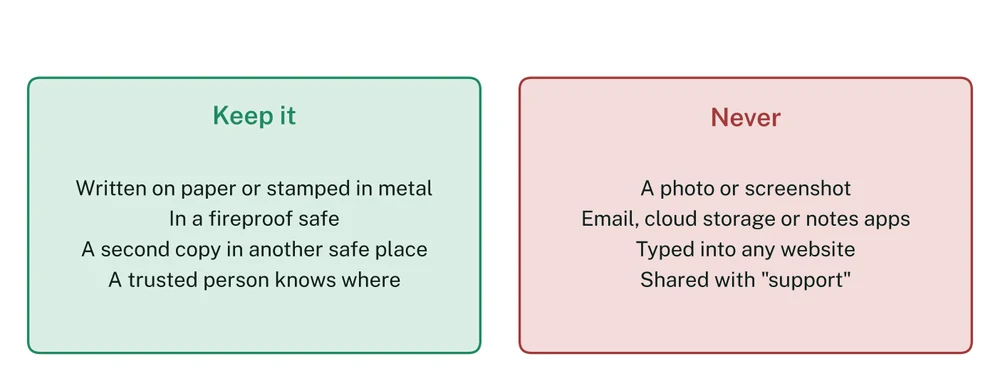
- Where to keep your seed phrase
- When the stakes get higher: multisig
- A ten-minute security drill
Read the whole chapter
The book walks through every idea here with worked examples and real numbers.
Get the bookFrom the chapter
The charts