Part One: The Problem
Chapter 1: The Shrinking Dollar
Why a raise can still leave you poorer, and how to measure inflation in your own life.
How the chapter opens
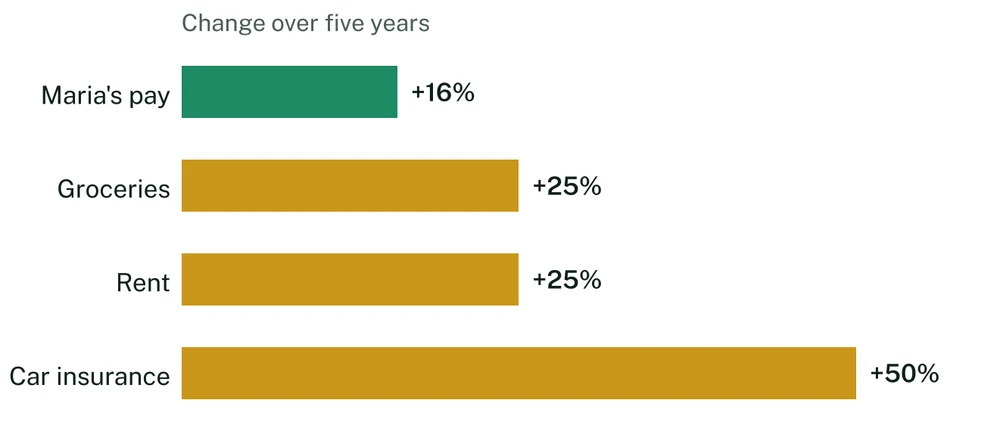
Maria Torres has worked at the same hospital for eighteen years. She is a good nurse, she has had a raise almost every year, and she has never missed a rent payment. Yet standing in the checkout line on a Saturday morning, she finally does the math she has been avoiding for months. The cart of groceries that cost her about $120 a few years ago now costs about $150. Nothing in it is fancy. It is food for her and her teenage daughter.
Key ideas
Try this
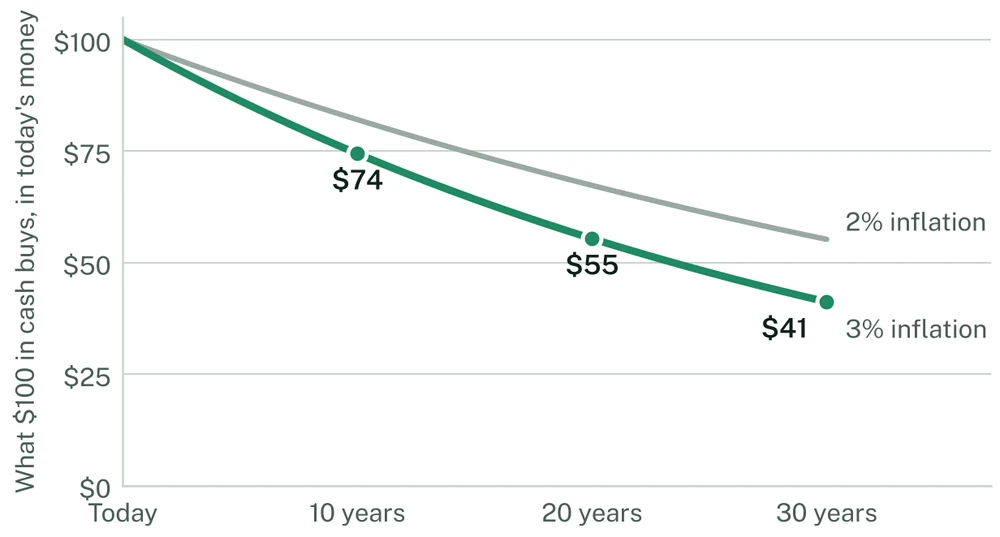
Find an old receipt, bank statement or photo of a menu from five or more years ago. Write down five things you buy regularly and what they cost then versus now, and compare that with how much your pay has risen. Then do Maria’s math on your own savings: what will your balance be worth in ten years at today’s interest rate, and what will it buy if prices rise 3% a year? Keep these notes; you’ll use them in Chapter 15 when you build your plan.
In this chapter
- The invisible pay cut
- Maria’s kitchen-table math
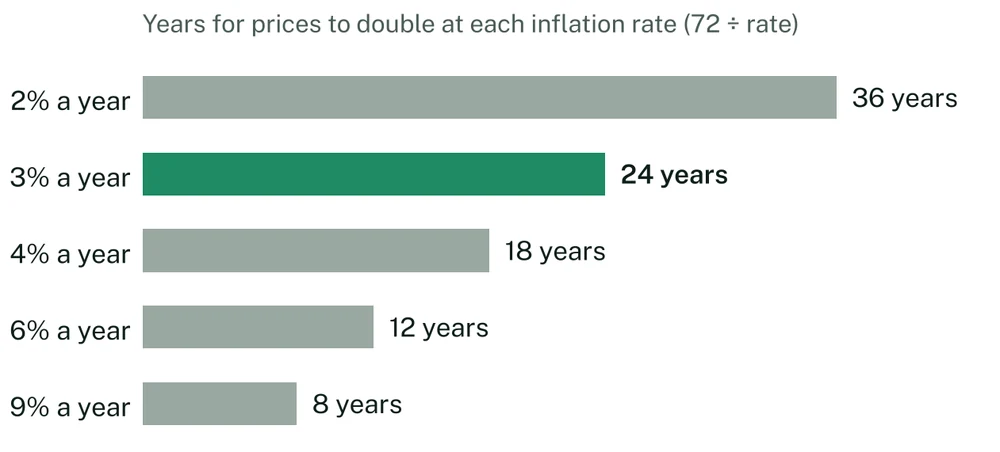
- The Rule of 72
- Your personal inflation rate
- Where does inflation come from?
- Who wins and who loses
- “Just put it in the bank”
- Why crypto entered the conversation
- How to use this book
Read the whole chapter
The book walks through every idea here with worked examples and real numbers.
Get the bookFrom the chapter
The charts