Part One: The Problem
Chapter 4: The Saver’s Dilemma
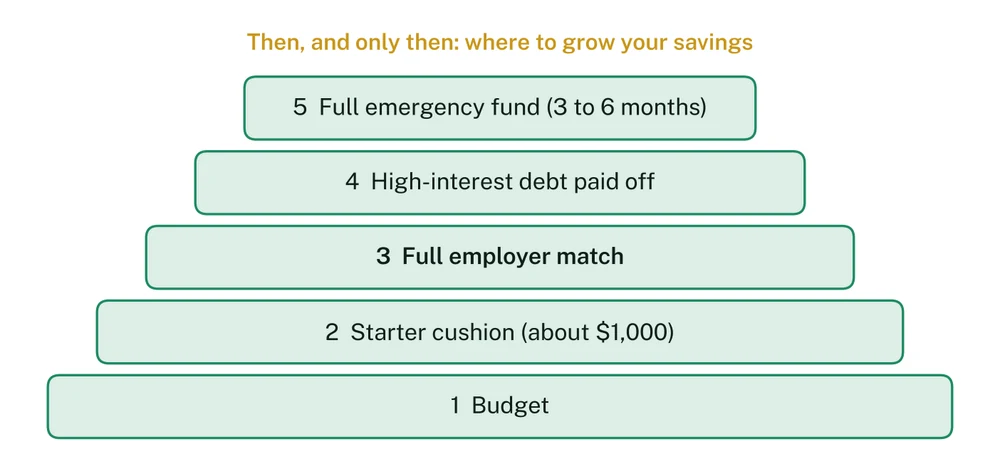
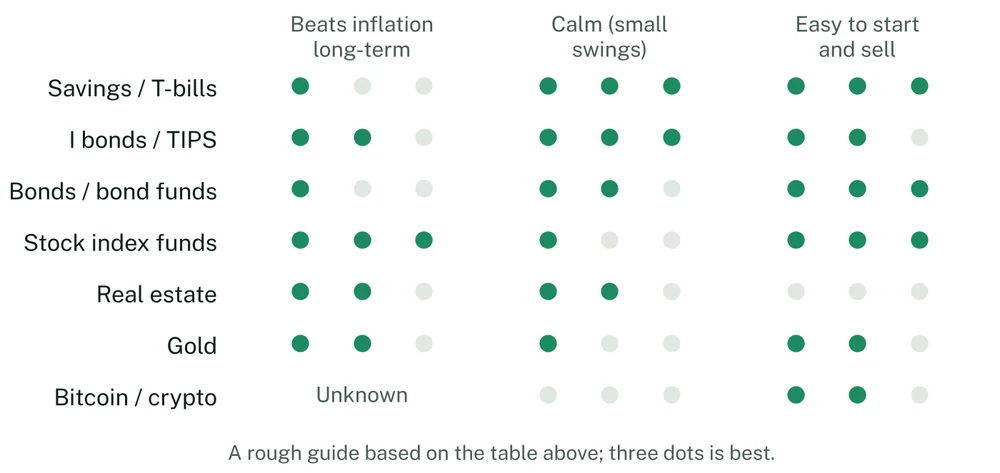
The order to build your finances in, and an honest comparison of the traditional inflation hedges.
How the chapter opens
If cash loses value, what should a careful person do with money they don’t need today? That is the saver’s dilemma from Chapter 1, and it is older than crypto by centuries. Before we look at Bitcoin, it’s only fair to look at the tools people have always used, with their real strengths and weaknesses.
Key ideas
Try this
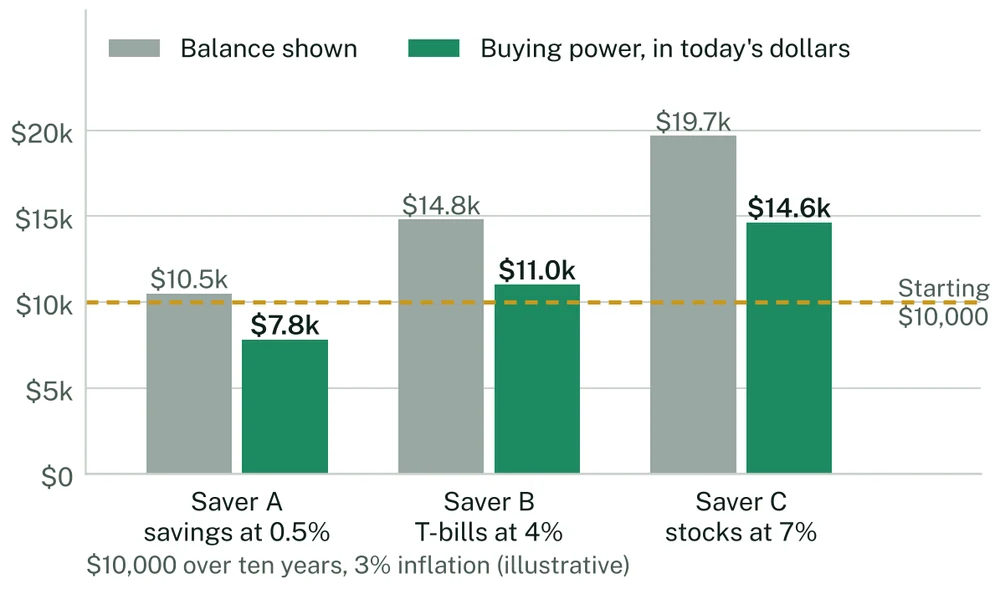
Write down where your savings sit today and estimate the real return of each place. Then check your foundation: How many months of expenses does your emergency fund cover? Are you getting your full employer match? What’s the interest rate on your highest-rate debt? Your first financial goal is whichever of these is weakest, before any investment. If your situation is complicated, a licensed financial professional can help you set the order.
In this chapter
- Maria’s near miss
- First, the foundation
- The foundation in numbers
- Real return: the number that matters
- The traditional hedges, honestly compared
- No perfect answer
- Where crypto fits in the conversation
- Maria puts things in order
Read the whole chapter
The book walks through every idea here with worked examples and real numbers.
Get the bookFrom the chapter
The charts